When you think of aloe vera, you probably think of hydration and skin repair. But aloe does so much more. Did you know that it also relieves itching? And did you know that aloe works as an anti-inflammatory? In this blog, we'll take you on a quick run through the most important benefits of aloe vera. So you'll know exactly how and when aloe can help you best.
1. Aloe vera hydrates and cools your skin
This probably comes as no surprise. Hydration and cooling are the best-known benefits of aloe vera. And rightfully so: no plant hydrates better than aloe. The gel that comes from the aloe vera leaf consists of 99% water. But it is also packed with vitamins, minerals, and amino acids.
The reason aloe vera is so hydrating is very simple: the sugar molecules (polysaccharides) in the aloe gel attract water (this is what we call a 'hygroscopic effect'). They lock it in and bind it to your skin.
Because of this, the hydration lasts. So if your skin is dry or sunburned, some aloe vera would be the perfect solution.
2. Aloe vera helps your skin recover
Aloe gel works wonders for wound healing. And this is nothing new. People knew about it thousands of years ago: written records about the plant's wound healing powers date back well before our era.
In short, it works like this: aloe gel stimulates the production of special cells called fibroblasts. This not only ensures faster recovery, but also helps minimize scar tissue and keeps the skin flexible and elastic. Redness disappears, swelling goes down, it helps with barrier repair. Aloe gel boosts the production of collagen and proteoglycans, which drives rapid tissue repair for things like abrasions, bruises, and minor wounds.
So if your skin is damaged, think of aloe.
3. Aloe vera relieves itching
Next to skin recovery and hydration, the power of aloe also lies in the smaller things. A great example of this is its ability to fight itching.
Here is how it works: aloe vera acts as a natural inhibitor of thromboxane. This is a substance in your body that causes tissue damage, pain, and irritation during skin trauma (like burns or frostbite). By blocking this substance, aloe vera instantly calms the skin.
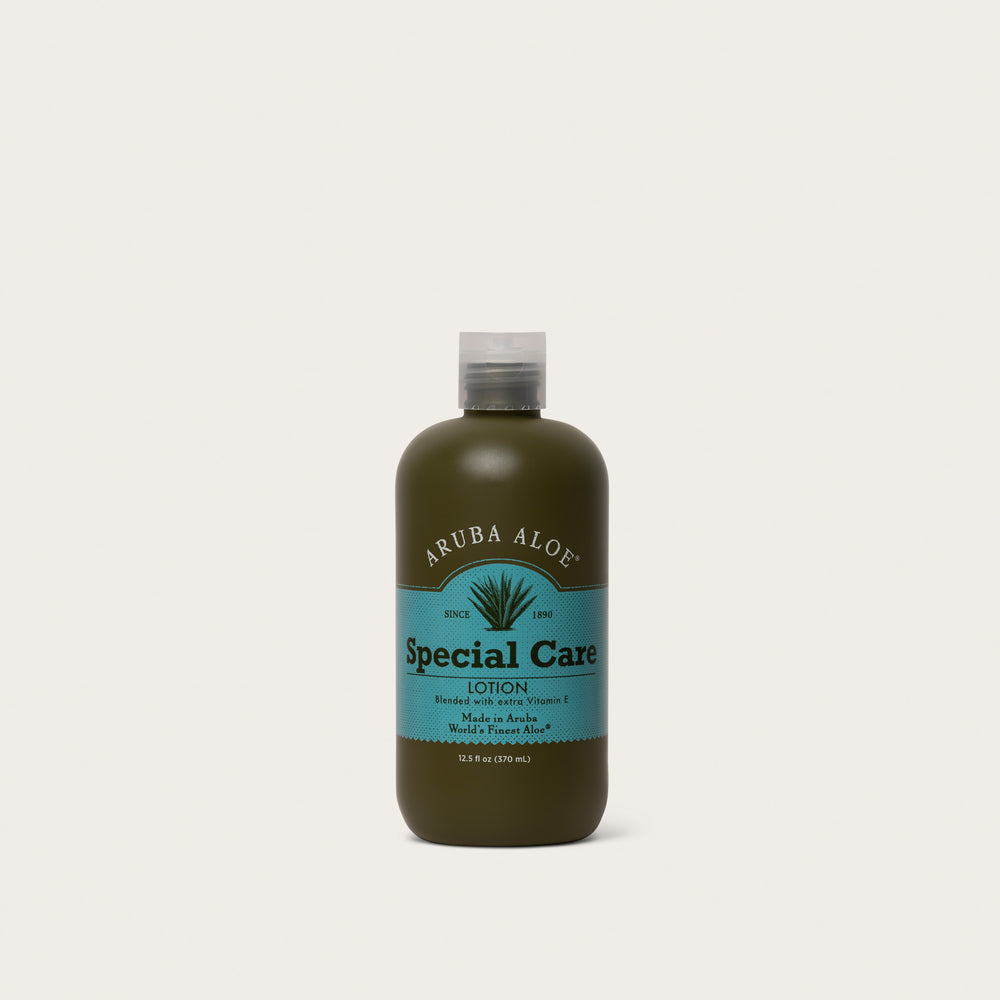
If your skin is irritated, just apply our aloe based skincare. You will notice the difference right away.
4. Aloe vera helps burn wounds heal
The power of aloe goes way beyond a little cooling relief after a day at the beach. Our research with Ghent University shows that aloe has a major impact on severely damaged skin – think of treating first- and second-degree thermal burns and radiation wounds (like those from x-ray or radium therapy). Not only do the wounds heal faster because of aloe, but the skin also stays healthier because there is less tissue loss.
5. Aloe vera is anti-inflammatory
Aloe gel contains active compounds that reduce inflammation both in and on your skin. For instance, it stimulates the activity of your macrophages (specialized immune cells). These cells help your skin clear up infections, allowing it to calm down much faster.
Because of this, aloe vera is widely used in traditional medicine to treat stubborn, inflammatory skin conditions like acne, psoriasis, and eczema.
6. Aloe vera is for all skin types
Because aloe vera is naturally a gentle and hydrating product, it works wonders for dry, irritated, or damaged skin. It is low in allergens.
Just keep in mind that you are often buying a cream or skincare product that contains other ingredients alongside aloe vera; those ingredients can, of course, still irritate your skin. Additionally, there is one important medical exception: if you have an allergy to plants in the lily family, aloe is obviously not right for your skin.
Keep an eye out for marketing tricks
There are endless products out there claiming to contain aloe vera. Always be critical. Just because your skincare or personal care product contains a trace of aloe doesn't mean you'll experience all of its benefits.
To illustrate this: our skincare always features a high percentage of pure, fresh aloe gel: between 10% and 45%. Other personal care products making aloe claims sometimes contain as little as 1% aloe. On top of that, it is often aloe sourced from a concentrate or powder – which has a lower quality. It completely changes how the natural product works.
Whether aloe actually does its job depends on several things: the percentage used, the origin of the plant, the way it has been processed.